

Discover accessible quality wines without premium markups
TL;DR:
- Direct-to-consumer channels now generate 64% of premium wine sales, increasing accessibility and reducing costs.
- Savvy buyers should explore lesser-known regions, use price comparison apps, and shop local for value.
- Wine ratings alone are unreliable; focus on quality-to-price ratio and multiple critic consensus for better deals.
Most people assume that a great bottle of wine comes with a great big price tag. That’s the story the industry has told for decades, and honestly, it’s worked a treat. But here’s the thing: top-quartile wineries now derive 64% of their sales from direct-to-consumer channels, quietly bypassing the very retail markups that inflate prices for everyday buyers. The gatekeepers are losing their grip. Premium wine is becoming more accessible than ever before, and the buyers who know where to look are drinking extraordinarily well without paying through the nose. This guide breaks down exactly how that works.
Table of Contents
- What drives wine accessibility and why pricing remains confusing
- How to spot value and avoid inflated costs: strategies for accessible wines
- Access versus desirability: the truth about ratings, QPR and statistical models
- Future trends and accessibility: multichannel approaches and European lessons
- Why accessibility is redefining wine enjoyment for real enthusiasts
- Explore accessible quality wines with FU Wine
- Frequently asked questions
Key Takeaways
| Point | Details |
|---|---|
| DTC boosts value | Direct-to-consumer sales help buyers access quality bottles without retail markups. |
| Staff picks and apps | Using staff recommendations and price comparison tools is key to finding accessible, genuine value wines. |
| QPR beats hype | Quality-to-price ratio and statistical models reveal truly underpriced wines, beyond high scores and marketing. |
| Multichannel lessons | European and post-pandemic trends prove direct access is reshaping wine enjoyment for enthusiasts. |
What drives wine accessibility and why pricing remains confusing
Wine accessibility sounds simple enough. It means being able to find and buy quality wine without needing a sommelier’s rolodex or a trust fund. But in practice, the path from vineyard to your glass runs through a maze of distributors, importers, wholesalers, and retailers, each clipping the ticket along the way.
Think about it this way. A boutique producer in the Barossa Valley makes a stunning Shiraz. By the time that bottle travels through a distributor, a wholesaler, and a bottle shop, the retail price can be double or even triple what the winery originally charged. You’re not paying for better wine. You’re paying for logistics and margin.
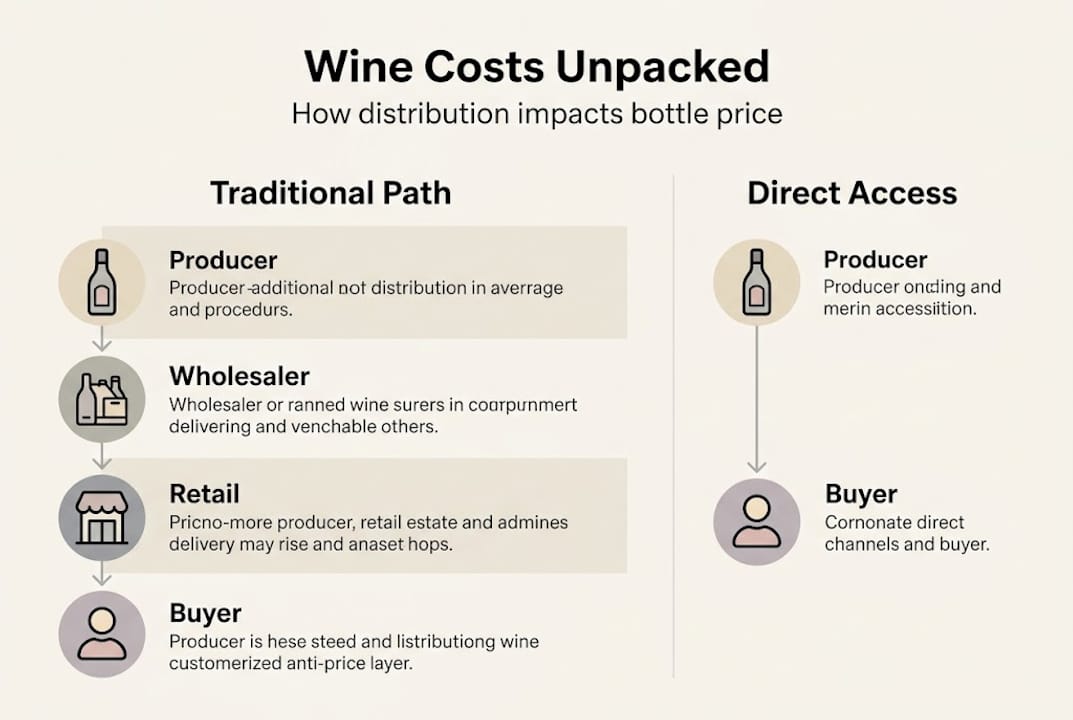
This is where understanding wine distribution models becomes genuinely useful. The traditional three-tier system, common in the US and echoed in various forms globally, was designed to regulate alcohol sales. It was never designed to benefit the consumer. It benefits the middlemen.
Direct-to-consumer (DTC) and hybrid channels have started to reshape this. Traditional retail offers immediacy but comes with full markups, while DTC and wine clubs provide direct sourcing and exclusives at lower prices. That’s a meaningful shift for buyers who care about value.
| Channel | Price point | Access to rare bottles | Convenience |
|---|---|---|---|
| Traditional retail | High | Limited | Immediate |
| DTC / winery direct | Lower | Good | Requires planning |
| Wine clubs | Mid to low | Excellent | Subscription based |
| Flash deal platforms | Very low | Outstanding | Time sensitive |
The catch? DTC has seen some contraction recently as premium buyers become more selective. Wineries are doubling down on quality relationships rather than volume. That’s actually good news for savvy buyers, because it means affordable luxury trends are pushing producers to compete on value rather than prestige alone.
“The best wine deals aren’t found on the shelf at full price. They’re found by understanding who’s selling, why they’re selling, and what they’re bypassing to get to you.”
Accessibility, at its core, is about removing unnecessary layers. Every layer you skip is money back in your pocket and quality in your glass.
How to spot value and avoid inflated costs: strategies for accessible wines
Knowing the market is one thing. Acting on it is another. Let’s get practical.
The single best piece of advice for finding genuinely accessible quality wine is deceptively simple: shop local for staff picks under $25, avoid Instagram trends, and use apps for price comparison. That’s not a throwaway tip. It’s a strategy that consistently outperforms chasing labels.
Local bottle shops, particularly the independent ones, often carry wines that never make it onto the shelves of big chains. The staff actually drink this stuff. Their picks reflect genuine enthusiasm, not shelf-placement fees. Ask them what they’ve been excited about lately. You’ll be surprised.
Here’s a practical approach to spotting wine value without getting played by marketing:
- Look beyond the famous regions. Wines from lesser-known appellations, think Riverland, Grampians, or Clare Valley, often deliver extraordinary quality without the premium attached to Coonawarra or Margaret River branding.
- Use price comparison apps like Vivino or Wine-Searcher to benchmark what a bottle actually sells for elsewhere before you buy.
- Seek out producers with small allocations. Scarcity doesn’t always mean expensive, especially when you’re buying closer to the source.
- Avoid bottles with heavy marketing spend behind them. If a wine has a celebrity face on it, you’re funding the campaign, not the grapes.
- Check for vintage variation. A great year in a modest region can outperform an average year from a prestigious one.
Pro Tip: Regional designations like AVAs (American Viticultural Areas) or Australian Geographic Indications signal where grapes were grown, not how good the wine is. A GI label from an emerging region can indicate a producer still building reputation, which often means better value before the critics catch on.
Knowing how to snag premium bottles smart is genuinely a learnable skill. It’s part research, part timing, and part willingness to step outside the familiar. And once you unlock savings on quality bottles, paying full retail feels almost offensive.

| Region | Typical price range | Value potential | Recognition level |
|---|---|---|---|
| Barossa Valley | $30 to $80+ | Moderate | Very high |
| Clare Valley | $20 to $50 | High | Moderate |
| Grampians | $18 to $45 | Very high | Lower |
| Riverland | $12 to $30 | Excellent | Low |
Access versus desirability: the truth about ratings, QPR and statistical models
Here’s where things get interesting. You’ve found a wine that’s accessible and reasonably priced. But is it actually good? This is where most buyers fall into a trap.
Wine scores, those 90-plus ratings plastered on shelf talkers, carry enormous psychological weight. A bottle scoring 92 feels meaningfully better than one scoring 89. But statistically, ratings often lack significance, and QPR via hedonic models and ANOVA analysis identifies true value far more reliably than a single critic’s number.
What does that mean in plain English? Small differences in scores, say three or four points, are often within the margin of error. They don’t reflect a meaningful difference in quality. Yet they can translate to a $20 or $30 difference in price. That’s the desirability premium at work.
Quality-to-price ratio (QPR) is a more honest lens. It asks: for what this wine costs, how does it perform? A wine scoring 88 points at $22 can have a far better QPR than a 92-point bottle at $75. Understanding wine desirability means separating genuine quality signals from marketing-inflated scores.
Hedonic pricing models, used by economists and serious collectors, break down what actually drives a wine’s price. Factors include vintage year, region, producer reputation, and critic scores. When you understand how wine value is determined, you start to see where the real gaps between price and quality exist.
Pro Tip: When reading wine scores explained by critics, look for consistency across multiple reviewers rather than a single high score. Consensus across three or more credible sources is a much stronger signal than one outlier rating.
Some practical things to keep in mind:
- A 90-point wine from a famous estate and a 90-point wine from an emerging producer are not priced the same. The difference is brand equity, not liquid quality.
- Blind tasting studies repeatedly show that consumers can’t reliably distinguish expensive wines from cheaper ones without the label present.
- Understanding wine scoring as a system, rather than gospel, helps you use it as one data point rather than the deciding factor.
Desirability is real. But it’s partly constructed. The buyer who understands this drinks better and spends less.
Future trends and accessibility: multichannel approaches and European lessons
The wine world is shifting fast. And some of the most instructive examples are coming from Europe, where producers have been quietly rewriting the rules on accessibility.
In Germany, estates moved to 63% DTC-centric models, and direct sales rebounded strongly post-COVID, improving accessibility for buyers who previously had no way to reach these producers. That’s not a niche trend. It’s a structural change in how wine reaches people.
The multichannel approach is the new normal. Producers aren’t choosing between DTC and retail. They’re doing both, plus export, plus flash platforms, plus wine clubs. Each channel serves a different buyer. The smart buyer figures out which channel gives them the best deal for the wine they want.
| Selling model | Producer benefit | Buyer benefit |
|---|---|---|
| DTC only | Maximum margin | Lower prices, direct access |
| Retail only | Volume, reach | Convenience, immediacy |
| Hybrid (DTC + retail) | Balanced revenue | Flexibility, choice |
| Flash platforms | Clears allocation stock | Significant discounts |
“Direct sales aren’t just a trend. They’re a correction. The industry is finally aligning producer value with buyer value, cutting out the layers that never added anything to the wine itself.”
For Australian buyers, the lessons are clear. Look for wine scarcity access through channels that connect you directly to producers or platforms with genuine buying relationships. The days of paying full retail for a bottle you could have sourced direct are numbered.
A few actionable takeaways right now:
- Follow small Australian producers on social media. Many announce direct sales, cellar door specials, and allocation releases there first.
- Join mailing lists for boutique wineries. First-release pricing is almost always lower than eventual retail.
- Explore European imports through specialist importers who bypass the big distributor chains.
- Watch for post-harvest and end-of-vintage clearances, particularly from premium regions with oversupply.
The future of wine accessibility is multichannel, direct, and increasingly transparent. Buyers who adapt to this landscape will consistently outdrink their budgets.
Why accessibility is redefining wine enjoyment for real enthusiasts
Here’s our honest take. The wine industry spent decades convincing people that price equals quality and that exclusivity equals enjoyment. That was never really true. It was a story that served producers, distributors, and retailers far more than it ever served the person holding the glass.
The shift towards direct sourcing and transparent pricing isn’t just a market correction. It’s a cultural one. Real enthusiasts, the people who actually care about what’s in the bottle, have always known that the best discoveries come from curiosity, not catalogues. From exploring changing value trends in emerging regions rather than chasing prestige appellations.
What many enthusiasts miss is this: status-driven buying dulls your palate. When you’re paying for a label, you’re primed to love it before you’ve even opened it. That’s not enjoyment. That’s confirmation bias with a cork in it.
Direct sourcing forces you to engage with the wine itself. You’re buying because of what’s inside, not what’s on the outside. That’s a more honest, more satisfying way to drink. And frankly, it’s a lot more fun.
Explore accessible quality wines with FU Wine
If this guide has lit a fire under your wine buying habits, good. That’s exactly the point. FU Wine was built for buyers who are done paying inflated prices for wines that should be within reach.
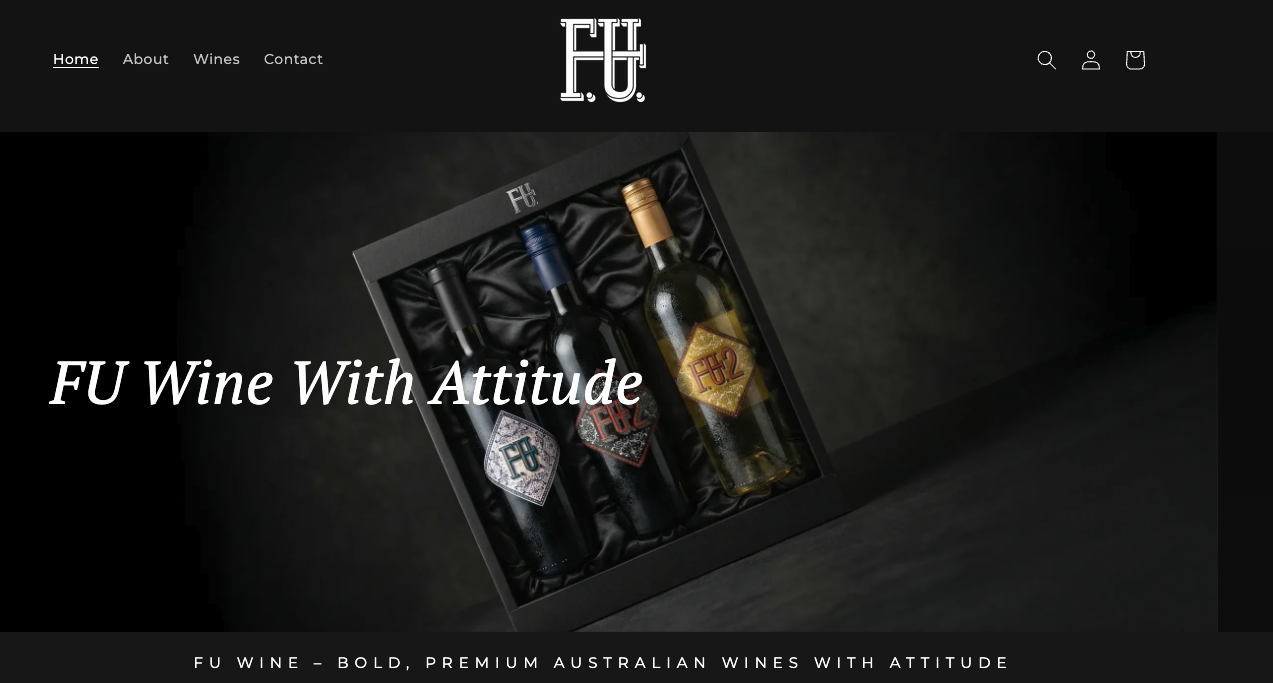
We source premium bottles direct, cutting through the layers of markup that inflate retail prices by 30 to 70 percent. From rare cellar releases to high-scoring boutique runs, our FU Wine direct selection rotates constantly so there’s always something worth getting excited about. No pretension. No gatekeeping. Just genuinely great wine at prices that make sense. Come find your next favourite bottle without the nonsense attached to it.
Frequently asked questions
Are direct-to-consumer wine purchases always cheaper than retail?
DTC enables higher margins for wineries by cutting out intermediaries, which often translates to lower prices for buyers, though shipping fees and state or territory restrictions can affect the final cost.
What are the best tools to find accessible, quality wines?
Shop local for staff picks under $25, use price comparison apps like Vivino or Wine-Searcher, and explore lesser-known regions where marketing premiums haven’t inflated prices yet.
Do high ratings guarantee wine value?
Not always. Ratings often lack statistical significance, so small score differences rarely reflect real quality gaps. QPR and hedonic models give you a far more reliable picture of genuine value.
How has the pandemic changed wine accessibility?
Direct sales rebounded post-COVID, with producers leaning harder into DTC and multichannel models, making premium bottles easier to access for buyers who value transparency and direct relationships over traditional retail convenience.